A verified starting point: Drive Mad
Drive Mad is a useful example of the balancing side of this collection. Its physical obstacle courses make forward and reverse inputs important, and a rollover can interrupt an attempt. The central decision is how much movement to apply before a change in the ground. It should not be confused with a conventional racing game that rewards holding maximum speed through every section.
Read the on-screen controls before starting. The desktop game page lists forward and reverse keys, while the embedded interface supplies the controls appropriate to the current version. Do not assume that a mouse movement turns the vehicle, that every entry has a jump button, or that all trial games share an identical keyboard layout. Learn the input response on an uncomplicated section before making a difficult crossing your first test.
Compare the approach, contact and recovery
Break a course into three decisions. First, choose an approach that brings useful momentum. Second, observe how the vehicle makes contact with the obstacle or next surface. Third, consider where it will settle afterwards. An approach that clears one feature may still leave too much speed for the next. Looking at the recovery area prevents you from treating the nearest obstacle as the whole problem.
For Drive Mad, watch the vehicle's angle as well as its distance travelled. A front end that keeps rising suggests a different problem from a car that stays level but cannot move far enough. Those situations deserve different experiments. Changing one input at a time makes the result easier to interpret than switching direction repeatedly and hoping the vehicle recovers.
Choose a game by its actual objective
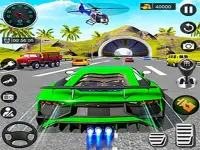
A keyword collection can include related vehicle formats, and their goals need not be identical. Check whether an entry asks you to finish an obstacle route, manage a particular vehicle, or perform another driving task. Compare the description and starting instructions, not just the thumbnail. The fact that two games show cars does not establish that they have the same steering, checkpoints or failure conditions.
This is also why you should avoid importing a solution from a differently named game. A technique can depend on a specific vehicle's response and the exact obstacle arrangement. Use related games to explore another style of driving, then allow yourself time to learn that game's own behaviour. Familiarity with one course gives you a useful way to observe, not a guarantee that the same movements will work everywhere.
Make retries informative
Before restarting, identify one thing you will change. Perhaps you want a slower approach, an earlier release or a more measured recovery. Keep the reliable part of the attempt consistent so you can see whether the new decision helped. If the next result fails differently, that is information about the vehicle and the route rather than proof that the entire approach was pointless.
For more detailed practice, the Drive Mad momentum and balance guide explains how to compare attempts without relying on invented level-specific tricks. Use it when you can identify the obstacle that keeps causing trouble. Choose a manageable goal for the session, such as reaching a landing in a more stable condition, and judge your progress by whether you understand the improvement.
Comfortable visibility matters too. Keep the vehicle and upcoming ground in view, focus the game area so inputs reach it, and pause when repeated attempts stop being deliberate. The useful skill across this collection is controlled adaptation: observe the current game, form a specific idea about its course, and test that idea with movements you can explain.