3 Minutes To Escape Games























This tag gathers titles related to the 3 minutes to escape collection, including 3 Minutes To Escap and a range of other escape-themed games. The list is broad, so expect variety in style, setting, and challenge type rather than a single uniform experience. Use the notes below to decide which kind of game matches your mood and to set realistic expectations before you start. What the Collection Contains The collection includes side-view platform challenges, maze-style routes, room-search puzzles, logic adventures, and vehicle or movement-based tasks. Some…Learn moreLatest update
This tag gathers titles related to the 3 minutes to escape collection, including 3 Minutes To Escap and a range of other escape-themed games. The list is broad, so expect variety in style, setting, and challenge type rather than a single uniform experience. Use the notes below to decide which kind of game matches your mood and to set realistic expectations before you start.
What the Collection Contains
The collection includes side-view platform challenges, maze-style routes, room-search puzzles, logic adventures, and vehicle or movement-based tasks. Some titles focus on quick timing, while others ask you to inspect a scene and work out what to do next. Because the range is wide, a game that shares the escape theme may still feel quite different from another in the same list.
When you browse, read the visible description and tags for each card. A title that mentions puzzles or rooms may ask you to search and think, while one that mentions racing or movement may ask you to control a character through a course. This is a suggestion for choosing, not a guarantee about how any particular game plays.
Choosing a Platform Challenge
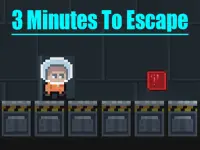
If you prefer running and jumping, look for titles that describe a character moving through a course or rooms with ledges. 3 Minutes To Escap fits this style: it is a side-view pixel platformer where you move left or right, jump with the space bar or up arrow, press a red button to open the door, and pass the level before three minutes run out.
Platform challenges tend to reward steady positioning and planned jumps rather than searching for hidden items. If you enjoy judging gaps and ledges, this kind of game may suit you. If you would rather inspect a scene at your own pace, a room or logic title might be a better match. Both approaches are valid; the choice depends on what you want from the session.
Choosing a Room or Logic Puzzle
Several titles in the collection describe rooms, mazes, or logic puzzles. These games usually ask you to look closely at the environment, identify what is out of place, and decide on a next step. The pace may feel slower than a platform challenge, and the challenge comes from observation and reasoning rather than reflexes.
If you enjoy taking your time to examine a scene, start with a title whose description mentions rooms, puzzles, or adventure. If you prefer a clear timer and constant movement, a platform or racing entry may be more satisfying. Checking the description before you play helps you avoid expecting one style when the game offers another.
Setting Expectations for Timing
Not every escape game uses a strict countdown. Some may give you time to explore, while others may press you to act quickly. 3 Minutes To Escap explicitly asks you to finish within three minutes, so the clock is part of the challenge. Other titles may emphasize a different kind of pressure or none at all.
Before starting, decide whether you want a timed test or a relaxed puzzle. If the clock stresses you, choose a title that does not foreground a countdown. If you enjoy pacing yourself against a limit, a timed challenge can add focus. This is a personal preference, not a rule about which game is better.
Making Your Choice
Take a moment to match the game style to your mood. If you want horizontal movement, jumping, and a clear objective, open 3 Minutes To Escap and try to reach the red button before time runs out. If you want to compare options or read more about the challenge, the strategy guide offers additional context.
You might also pick a room-search title for a quieter session, a maze for a different kind of navigation, or a movement-based game for variety. The collection is mixed, so there is no single right starting point. Choose the style that appeals to you now, play a short session, and switch to another approach whenever you want a change.