


Traffic Jam 3D: Planning Routes Through the Vehicle Puzzle
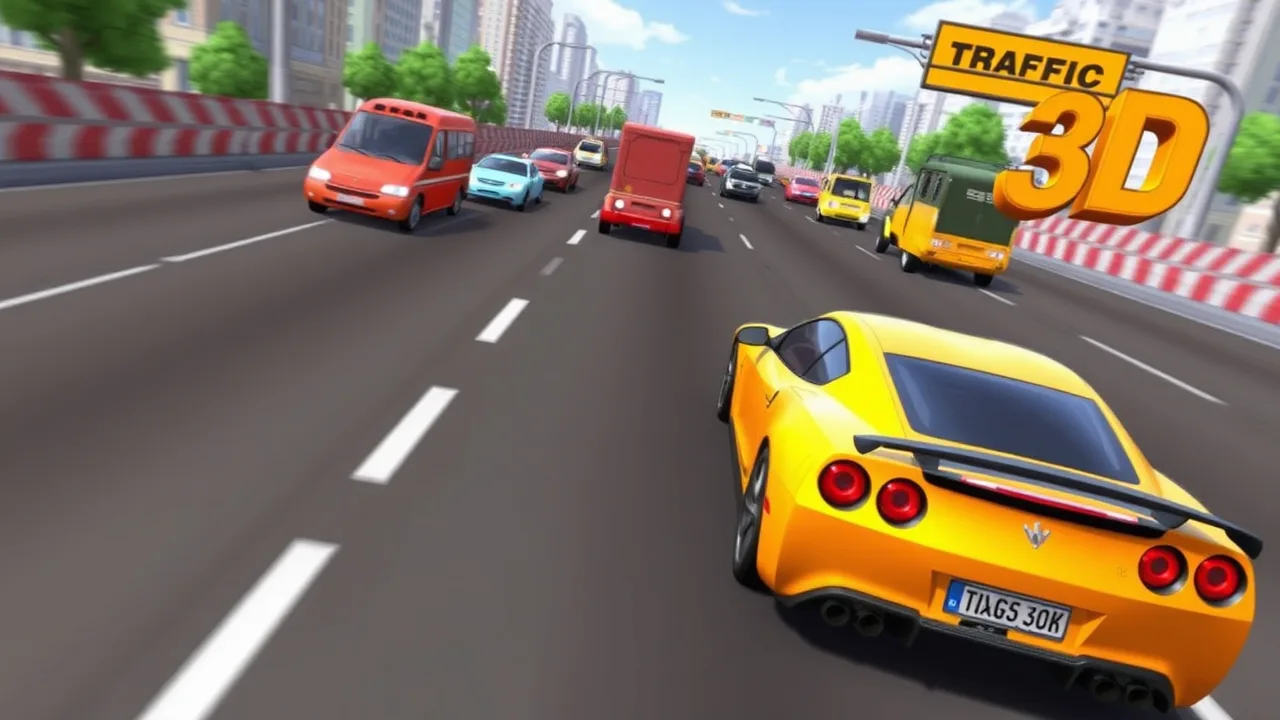
A traffic jam is easier to understand when you stop watching every car at once. Choose one blocked vehicle, identify what stands in its way, and work backwards until you find a move you can actually make. That is the useful starting point for Traffic Jam 3D on this site: a vehicle rearrangement puzzle, rather than a highway race in which you steer between moving trucks.
The distinction matters because games with similar names can ask for completely different skills. This version places you in the role of a traffic controller. You reorganize vehicles and open routes through a congested arrangement. Read the board, make deliberate selections, and judge whether a move releases space or merely shifts the blockage somewhere else. Fast reactions are less useful than a clear reason for the next action.
Open Traffic Jam 3D alongside this guide if you want to connect the advice with the actual layout. The method below focuses on recognizing dependencies, protecting useful gaps, and learning from unsuccessful arrangements. It does not assume highway driving modes, a garage economy, nitro controls, or a particular number of levels.
Read the layout before choosing a vehicle
Begin by separating the scene into occupied spaces and potential routes. A car near an opening can attract your attention even when another vehicle blocks its path. Look beyond that first car. Where would it travel if the obstruction disappeared? Would another vehicle immediately take its place? Does the route require one small adjustment or several connected moves? These questions turn a crowded image into a manageable planning problem.
Then look for vehicles with room around them. A movable vehicle is useful because it gives you an immediate experiment, but movement alone is not progress. Compare the space it occupies before and after a possible action. Ideally, the new arrangement releases a lane, makes another vehicle accessible, or reduces the number of obstacles between a target and its destination. Avoid moving a convenient car simply because it is convenient.
Use the displayed controls deliberately
The game uses mouse clicks or touch input. Select vehicles and follow the interaction shown by the current game screen. A small, deliberate input is easier to interpret than repeatedly tapping different objects. Watch what changes after each action: the selected vehicle, the available space, and the path that has opened or closed. Confirm the result before you issue another command, especially when the scene contains several similar-looking cars.
On a smaller display, allow enough room to distinguish vehicles and boundaries. If the browser scrolls instead of interacting with the board, refocus the game area and try again without rushing. This is an interface adjustment, not a puzzle solution. Once your inputs reliably reach the game, return to planning. Repeating a gesture more quickly will not make a blocked path become a legal route.
Plan backwards from the opening
A useful planning sentence is, “This vehicle can leave when that space is clear.” Identify the obstruction, then ask what would let that obstruction move. You may discover a short dependency chain: one car needs room that a second car occupies, while the second can move only after a third is repositioned. The third vehicle becomes your immediate task, even if it is far from the exit.
Keep the chain short enough to remember. You do not need a complete solution before taking the first move. Two or three connected actions can establish a direction and reveal more information. After executing them, reassess the whole arrangement. A move that opens an unexpected route may improve your original plan; a move that consumes a critical gap may show that you need a different order.
Treat empty space as a shared resource
The most valuable part of a crowded board may be an empty patch rather than a particular car. That space can let several vehicles change position, so using it for one action has consequences elsewhere. Before occupying a gap, consider which other vehicle also needs it. If two routes compete for the same room, their order matters. The best move may be to finish one route before starting the other.
For example, imagine that shifting one vehicle into a central gap would clear an outer lane. That sounds helpful until you notice that another vehicle must cross the central gap first. Moving the outer car immediately could trap the second route. This is a general planning example, not a promised level layout. The lesson is to evaluate what a gap enables before filling it.
Separate temporary parking from a final position
Some rearrangements are staging moves. They place a vehicle somewhere useful for a short time so that another action becomes possible. A staging move can be correct even when it does not directly lead towards an exit. Its value comes from the next action it enables. Before making one, state that next action clearly. Otherwise, temporary parking can become another obstruction with no purpose.
Equally, do not assume that a vehicle has reached its final useful position just because you moved it once. A puzzle can require you to revisit part of the layout after another route opens. Keep track of why you placed a car somewhere. If the reason no longer applies, reconsider it. A flexible plan is more useful than insisting that every previous move must remain permanent.
A practical routine for difficult arrangements
Start with one target route and count its immediate obstructions. Find an action that removes an obstruction without creating a more serious one. Execute that action and pause. Check whether the target can now move, whether a new route has appeared, and whether your staging spaces remain available. Repeat this short cycle rather than treating the entire board as one enormous decision.
When no move seems helpful, change the question. Instead of asking which car can leave, ask which car is preventing the greatest number of other actions. That vehicle may be the bottleneck. Work out what it needs, even if solving its position does not immediately empty the board. Releasing a shared bottleneck can be more productive than completing a route that was already almost clear.
Another useful check is to compare two candidate moves before committing. Which one leaves more options afterwards? Which one depends on fewer additional changes? Which one occupies a space that is difficult to recover? You will not always know the answer, but making the comparison prevents random tapping. It also gives you a specific reason to revise the plan if the chosen action disappoints.
Recognize the difference between information and progress
An experiment can be valuable even when it does not clear a vehicle. Perhaps it reveals that a boundary is closer than you thought, that a vehicle cannot follow the route you imagined, or that a gap is too small for the planned arrangement. Record that observation mentally. The failed idea has narrowed your choices. Repeating it without a changed condition, however, adds no new information.
If the game offers a way to restart the arrangement, use a restart with a purpose. Identify the earliest decision you would change, rather than replaying the same sequence at higher speed. Your next attempt should test a different order or preserve a space that you previously consumed. There is no need to invent a perfect solution immediately; a better question is already useful progress.
Common habits that make traffic puzzles harder
One habit is following the most visually obvious car while ignoring the vehicles around it. Another is clearing a small local area that has no connection to a usable route. A third is making several inputs before observing the first result. All three habits reduce your understanding of the board. Slow down at the moment of selection, then let the visible result guide the next choice.
Be careful with the idea that a shorter route must be the correct route. A car may sit close to an opening but depend on many other changes. A more distant vehicle may have a clear path and release much-needed space. Judge a route by its dependencies and its effect on the board, not just by the distance between a vehicle and an apparent destination.
Compare the first and second obstruction
When a route appears almost open, inspect what sits beyond the first obstruction. Clearing that first vehicle may expose another blockage rather than finish the route. Recognising this early helps you choose useful staging positions. You can prepare room for the second obstruction while solving the first, instead of discovering too late that the space you need has already been occupied.
Choose a useful goal for a short session
You can learn something without finishing every arrangement you encounter. During one attempt, focus on identifying the main bottleneck. During another, try to explain each staging move before you make it. In a later session, compare how often your first plan survives after the first few actions. These are observable goals that help you evaluate your decisions without relying on an invented score target.
When you want a change of pace, the broader Arcade Games collection provides other short-session choices. Read each game's own objective and controls rather than assuming that every arcade title rewards quick inputs. Traffic Jam 3D is a good reminder that a simple interaction can support a planning problem: the useful question is not how quickly you can click, but what the next move makes possible.