they are coming unblocked
 poki.com.es
Sign in to keep recently played games, favorites and your player profile available on this site.
Popular Games
Last Played
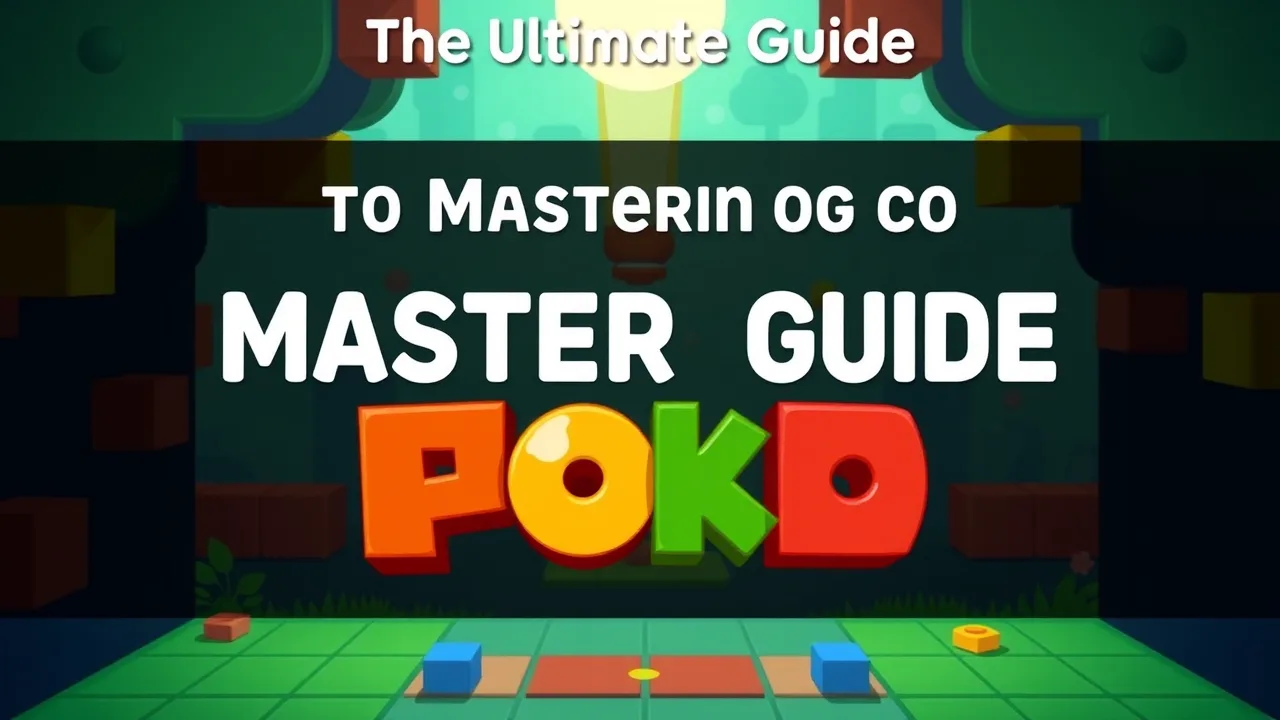
Prepare to dive into the colorful and challenging world of Pokio, a captivating puzzle experience that tests your logic and spatial awareness. This guide is designed to help you understand the core mechanics, master advanced strategies, and navigate the unique levels that this brain-teasing game offers. Whether you are a casual player looking for a quick mental break or a dedicated gamer seeking to conquer every stage, understanding the fundamental rules and hidden tricks is essential for success.
At its heart, Pokio is a game of precision and planning. The primary objective involves navigating a character through a grid-based environment to reach a specific destination. Unlike standard platformers, the movement in this title is often tied to a sliding mechanic. Once your character begins moving in a cardinal direction, they typically continue until they hit an obstacle or the edge of the play area. This means every move counts, and you must constantly look several steps ahead to avoid trapping yourself in a corner or falling off the map.
The controls are intuitive, usually relying on simple directional inputs to dictate the path of your avatar. However, the simplicity of the controls belies the complexity of the puzzles. As you progress, the game introduces various environmental hazards and interactive elements that alter how you traverse the board. Mastering the slide-and-stop rhythm is the first step toward becoming a proficient player.
Success in this puzzle game is rarely achieved through trial and error alone. Instead, it requires a methodical approach to pathfinding. Before making a move, take a moment to visualize the entire trajectory. Ask yourself where the current move will leave you and whether that position opens up new opportunities or limits your options. A common mistake for beginners is focusing solely on the immediate next step rather than the long-term solution.
Working backward from the goal can be an effective strategy. Identify the final position you need to reach and determine which approach vector is required to get there. By deconstructing the puzzle from the end to the beginning, you can often spot the critical moves that are necessary to clear the path. This reverse-engineering technique is particularly useful in later levels where the grid layout becomes more intricate.
The environment in Pokio is filled with obstacles that serve as both barriers and tools. Walls and blocks stop your movement, which is essential for positioning, but they can also block your path to the exit. Learning to distinguish between permanent structures and movable objects is key. Some objects can be pushed to create new stopping points, while others must be avoided entirely.
Timing and sequence are crucial when dealing with multi-step puzzles. Often, you must manipulate the environment in a specific order to succeed. For instance, you might need to push a block to the left to create a stopping point for a subsequent move to the right. Experimenting with these sequences helps build an intuition for how objects interact within the game's physics engine.
To help you get started or refresh your memory on the game's features, here is a quick reference table summarizing the key aspects of the gameplay experience.
| Feature | Details |
|---|---|
| Gameplay Style | Grid-based sliding puzzle |
| Controls | 4-directional input (Arrow keys or WASD) |
| Session Pace | Turn-based, relaxed, thinking time allowed |
| Device Fit | Optimized for both desktop and mobile screens |
| Category Match | Ideal for Logic and Brain Training enthusiasts |
Once you have grasped the basics, you can start focusing on efficiency. In many puzzle games, your performance is graded based on the number of moves taken or the time elapsed. To achieve a high rating, you must find the most optimal path through the level. This often involves finding "pivot points"—specific spots on the grid where you can change direction without wasting movement.
Look for patterns in the level design. The developers often reuse specific configurations but add a new twist. Recognizing these recurring patterns allows you to apply known solutions to new problems more quickly. Additionally, try to minimize backtracking; every unnecessary move lowers your efficiency score and increases the risk of making a mistake.
Even experienced players can fall into traps set by the game's design. One of the most frequent errors is "locking" the character against a wall with no way to move away from it. Always ensure that your next move leaves you with at least two escape routes. Another pitfall is ignoring the boundaries of the play area; falling off the edge usually results in an instant restart of the level.
Patience is your greatest asset. If you find yourself stuck, take a break and return with fresh eyes. Sometimes the solution is hidden in plain sight, obscured only by your own tunnel vision. Remember that the game is designed to be solvable, so there is always a logical path forward, even if it requires a creative combination of moves.
Players often have specific queries regarding the mechanics and features of the game. Here are answers to some of the most common questions to help clarify the experience.
Is there a time limit for each level?
Generally, this title focuses on logic rather than speed. Most levels allow you to take as much time as you need to plan your moves. However, some special challenge modes might introduce a timer to test your quick thinking under pressure.
Can I undo a move if I make a mistake?
Yes, the game typically includes an undo feature. This is a vital tool for correcting errors without having to restart the entire level. It encourages experimentation, as you can test a theory and quickly reverse it if it doesn't work out.
Are there different types of puzzles?
While the core mechanic remains consistent, the game introduces variety through different environmental themes and object interactions. You will encounter levels that require pushing blocks, activating switches, or navigating through moving hazards, keeping the gameplay fresh and engaging.
In a crowded market of casual games, Pokio distinguishes itself through its polished design and satisfying difficulty curve. It strikes a perfect balance between being accessible to newcomers and challenging enough for puzzle veterans. The visual style is clean and vibrant, ensuring that the game elements are easy to read and interact with. Furthermore, the sense of accomplishment you feel after solving a particularly tricky level is incredibly rewarding.
The game is not just about solving a problem; it is about the journey of discovery. Each level feels like a self-contained logic problem that invites you to engage your brain. Whether you play for five minutes or an hour, the experience is consistently engaging and mentally stimulating.
Are you ready to test your wits and embark on a journey of logic and precision? The challenges are waiting, and the solutions are yours to discover. Do not let the obstacles intimidate you; every master puzzle solver started with a single move. Click the link below to launch the game and see how far your logic skills can take you. Challenge yourself to beat your best score and unlock the satisfaction of mastering every grid.
Play Pokio Now