they are coming unblocked
Popular Games
Last Played
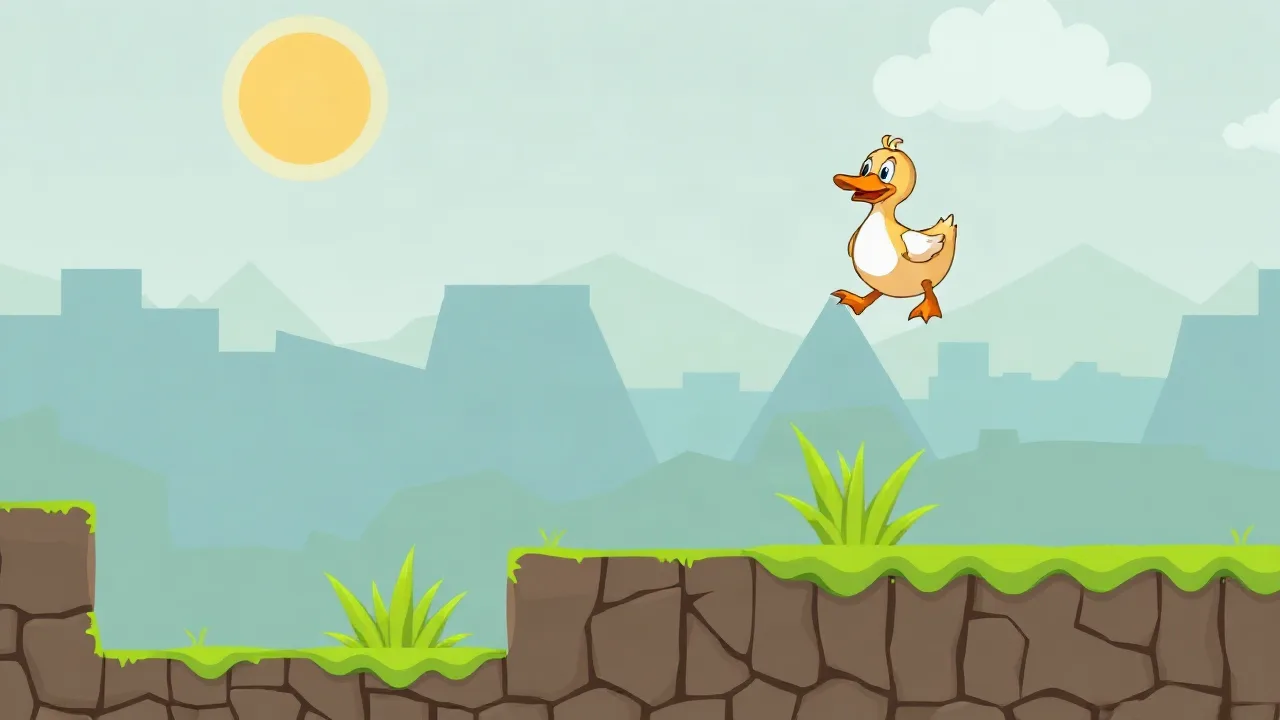
Survival games often look simple from the outside, yet they reward players who pay attention to timing, control habits, and small adjustments. Duck Jump is a hypercasual 2D animal game where the premise is direct: fall down, jump up, and try to survive as long as you can. The instructions are equally clear, with arrow keys or mouse clicks on PC and screen taps on mobile. This guide explores how to approach that premise thoughtfully, using practical suggestions rather than claiming fixed solutions. The goal is to help you build a steadier rhythm, understand your own reactions, and decide how to structure practice sessions so that longer runs feel earned rather than accidental. Whether you are new to the game or returning after a break, the sections below offer ways to think about control, focus, and improvement without inventing mechanics that are not part of the game.
The first step is to accept what the game actually asks of you. Duck Jump is built around two opposing actions: falling down and jumping up. That might sound contradictory, but it reflects the core challenge of staying alive in a changing environment. You are not simply holding one direction and hoping for the best. Instead, you are constantly deciding when to let gravity take over and when to push upward. Treating these two actions as a pair, rather than as separate goals, helps you understand why rhythm matters. If you only focus on jumping, you may miss opportunities to fall safely. If you only focus on falling, you may not recover in time. A balanced mindset prepares you to respond to whatever the game presents.
It also helps to remember that the game does not promise a fixed path or a guaranteed outcome. Survival length depends on your reactions, your control choices, and the situations you encounter. Some players will naturally prefer arrow keys because they offer distinct directional inputs, while others may find mouse clicks more comfortable during quick adjustments. On mobile, tapping the screen or using a finger gives you direct access to the same basic actions. None of these options is objectively superior. The important thing is to choose the control method that feels most predictable to you, then stick with it long enough to notice patterns in your own responses. Consistency in input often matters more than switching methods every few minutes.
Control choice is personal, and it is worth experimenting before you settle. Arrow keys on a keyboard give each direction its own button, which can make precise timing feel more deliberate. If you are someone who likes knowing exactly which input you pressed, this approach may suit you. Mouse clicks, on the other hand, let you respond with a single hand and can feel more fluid during rapid sequences. Some players find that clicking reduces the mental step of locating a key, especially when attention is already focused on the screen. Neither method removes the need for timing; they simply change how your hand delivers the input. Try each for a short stretch and notice which one lets you react without second-guessing.
On mobile devices, the touchscreen interface changes the physical experience again. Tapping with a finger or thumb puts your input directly on the play area, which can feel more immediate than reaching for a keyboard. The tradeoff is that your hand may cover part of the screen, so consider how you hold the device and where your thumb rests. A comfortable grip that does not obscure important visual information can make a noticeable difference over a longer session. If you switch between PC and mobile, expect a short adjustment period. Your brain has learned one set of distances and pressures, and the new input method will feel different at first. Give yourself time to rebuild that familiarity rather than judging performance too quickly.
Rhythm in a survival game is not about metronome precision. It is about developing a repeatable pattern of attention: watch, decide, act, then reset your focus. When you play Duck Jump, try to notice the natural pause between one action and the next. Even a fraction of a second of calm can help you process what is happening before you commit to an input. If you rush every decision, you may find yourself reacting to the previous situation rather than the current one. A useful suggestion is to count quietly in your head during a run, not to hit an exact number, but to encourage a calm pace of attention. Let the visible situation determine the input; do not click automatically just to keep a count. This kind of internal pacing can reduce panic and make your responses feel more deliberate over time.
Repetition also reveals which moments tend to trip you up. After a few runs, you may notice that certain sequences of falling and jumping feel smoother than others. That is not a guarantee that the same pattern will always work, but it is a clue about your personal timing. Keep a mental note of where you felt confident and where you hesitated. Do not assume that one remembered input pattern is a solution for every situation. Instead, you are building a library of reactions that you can draw on when situations feel similar. Over time, this library makes it easier to stay calm, because you have practiced responding to change rather than hoping change will stop.
How you structure practice matters as much as how long you play. One approach is to divide your time into short, focused rounds with brief pauses between them. For example, you might play several runs back to back, then stop for a minute to reflect on what felt awkward. During the pause, ask yourself a simple question: did I hesitate, overcommit, or lose track of the screen? Writing the answer down is optional, but even a quick mental review helps reinforce learning. Short sessions also reduce fatigue, which can quietly degrade reaction time. If you notice your attention drifting, it may be better to take a break than to push through another run on autopilot.
Another option is to alternate between control methods during a practice block. Spend a few runs using arrow keys, then switch to mouse clicks, and compare how each feels. You are not trying to prove one is better; you are gathering personal data about comfort and predictability. If you play on mobile as well, include a short touchscreen segment so your fingers stay familiar with that input. The point of alternating is to keep your awareness sharp and to prevent any single method from becoming a crutch you cannot evaluate. After the block, choose the method that felt most consistent and use it for your next longer session. This deliberate rotation can make your final choice feel informed rather than habitual.
As survival time increases, so does the mental load. Early in a run, you may feel alert and reactive, but sustained attention can blur if you do not manage it. One suggestion is to break the run into mental checkpoints. Rather than thinking about surviving forever, focus on reaching the next moment where you can reassess. This keeps your attention in the present and prevents the pressure of a long run from overwhelming your decisions. If you find yourself tensing up, try relaxing your shoulders and loosening your grip on the keyboard or mouse. Physical tension often translates into rushed inputs, and a calmer body can support a calmer mind.
It also helps to accept that longer runs will not always feel the same. Sometimes you will be fully focused; other times, your attention may wander for a second. When that happens, the best response is usually to simplify. Return to the basic pattern of watching, deciding, and acting, without trying to compensate for the lapse with extra speed. Panic often creates a cascade of mistakes, while a quiet reset can bring you back into control. If you notice a habit of overcorrecting after a near miss, practice deliberately slowing your next few inputs. You are not aiming for a specific score or outcome; you are training yourself to recover gracefully, which is a skill that serves you well in any survival challenge.
If your runs keep ending sooner than you would like, consider whether your control setup is working against you. On PC, arrow keys and mouse clicks each have different physical demands. If your hand feels cramped or your fingers are stretching to reach keys, a small adjustment in posture or hand position may help. On mobile, screen size and grip can affect how accurately you tap. If your thumb covers part of the play area, shifting your hold slightly might give you a clearer view. These are simple suggestions, not guaranteed fixes, but they address common sources of frustration that have little to do with skill. Sometimes the problem is environmental rather than mental.
Another common issue is inconsistency between sessions. You may play well one day and struggle the next, even without changing anything obvious. Fatigue, distraction, and unfamiliarity with a new device can all play a role. A practical response is to start each session with a warm-up: a few relaxed runs where the goal is simply to reconnect with the controls, not to achieve a particular result. Treat the warm-up as calibration rather than competition. If you still feel off after warming up, it may be worth shortening the session or switching to a different control method for a while. The aim is to keep practice productive, not to force performance when conditions are working against you.
Duck Jump sits alongside a varied set of games on the same site, and that variety can be useful even when the titles are unrelated. The poki duck jump tag gathers a mixed selection that includes different genres, themes, and control styles. Browsing this collection is not a strategy for improving at Duck Jump itself, but it can help you notice how other games handle timing, input, and focus. Watching or trying a platformer, a casual puzzle, or a quick reflex challenge may reveal habits you can carry back to your main game. The collection is not uniform, so do not expect every title to share Duck Jump's premise. Its value lies in contrast: seeing how differently other games ask you to respond can sharpen your awareness of your own preferences.
When you explore the tag, treat it as a source of ideas rather than a checklist. You might notice that one game rewards patient observation while another demands rapid tapping. Those contrasts can prompt useful questions about your own play style. Do you prefer games that let you plan, or do you thrive on immediate reaction? Answering that question honestly can guide how you approach Duck Jump. If you realize you perform better when you have a moment to think, you may lean toward a more deliberate rhythm. If you enjoy quick responses, you might experiment with faster input patterns. Either way, the wider collection gives you a reference point for understanding what feels natural to you, without implying that any single approach is correct.
Ultimately, Duck Jump rewards players who treat survival as a practice of attention rather than a test of perfection. Fall down, jump up, and try to survive as long as you can: the premise is simple, but the skill lies in how thoughtfully you respond to it. Choose a control method that feels predictable, structure sessions that keep you engaged, and use comparisons and troubleshooting to refine your approach. Explore the wider collection when you want fresh perspective, but return to your own observations as the real guide. With patience and steady rhythm, longer runs become more consistent, and the game remains enjoyable whether you are aiming for a personal best or simply enjoying the challenge.
Try the approach in Duck Jump. Begin with one listed input method, watch the result of a deliberate action, and let the next visible situation determine what you do. Surviving longer is the objective; the practice suggestions above are ways to assess your own decisions, rather than guarantees about a run.