
they are coming unblocked
 poki.com.es
Sign in to keep recently played games, favorites and your player profile available on this site.
Popular Games
Last Played
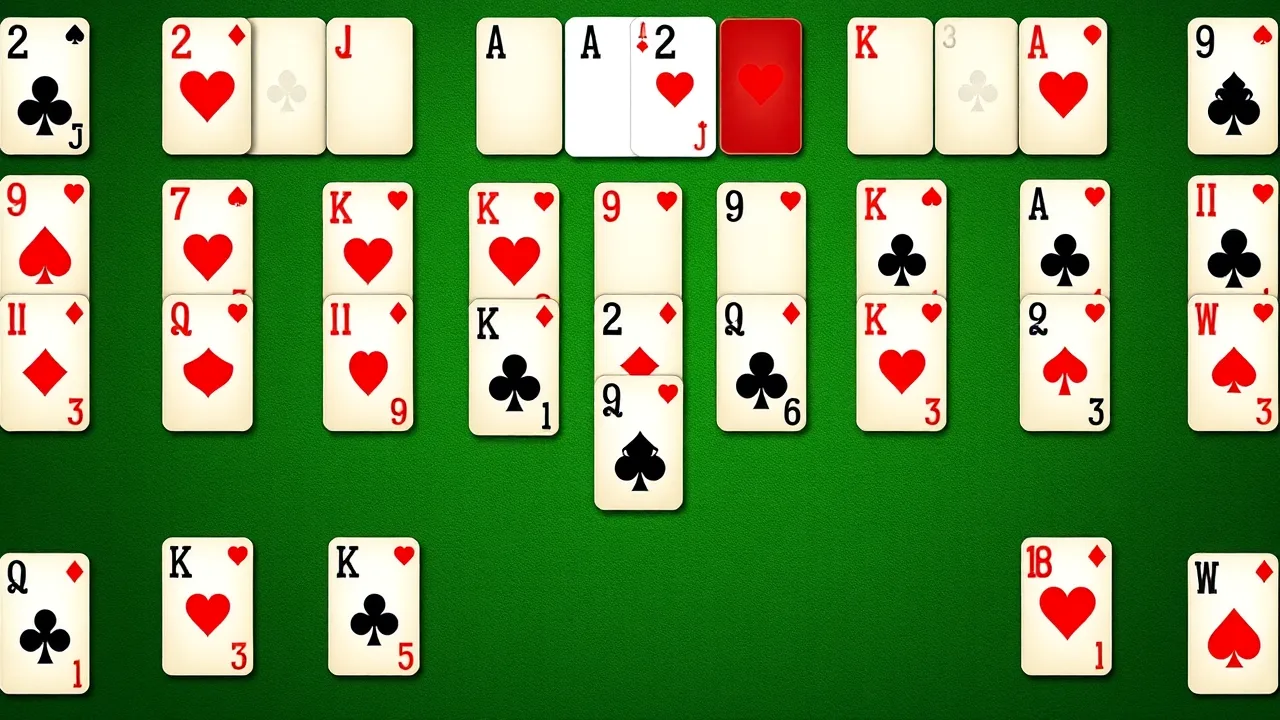
Freecell Solitaire offers a refreshing twist on classic card gaming by giving players more control over every move. With all cards visible from the start and no luck involved, it rewards careful planning and smart sequencing. Whether you are new to the game or looking to sharpen your skills, this guide explores practical techniques that help you win more often while enjoying a relaxing mental workout.
This keyword page works best when it helps players move from general interest to a more focused selection. For readers who want more games in this style, freecell solitaire gives a direct path to related options without breaking the flow of the page.
The game uses a standard fifty-two card deck arranged in eight tableau columns. The four top left cells serve as free cells where you can temporarily store cards, while the four foundation piles in the top right are where you build up each suit from ace to king. The goal is to move all cards to the foundations following suit order. Because every card is face up, success depends on logic rather than chance.
Free cells act as temporary parking spots for cards you need to move out of the way. Each cell holds only one card at a time, and you can move a card from a cell to the tableau or a foundation whenever it fits. Using free cells wisely is key to freeing up blocked cards and creating smooth sequences. Avoid filling all four cells too early, as this limits your options for rearranging the tableau.
Unlike some solitaire variants, you can build sequences in alternating colors, which gives you more flexibility. For example, a black eight can sit on a red nine, and a red jack can go on a black queen. Planning these sequences helps you uncover hidden cards and open up columns. Try to build longer sequences when possible, since they are easier to move as a group using multiple free cells.
Clearing the top cards of each column is crucial because it reveals what is underneath. Focus on columns with many face-down cards, especially if an ace or low card is buried. Before moving a card, ask yourself if it helps reveal another card or if it blocks a useful sequence. Sometimes the best move is not to build on a foundation right away but to keep a card in the tableau to maintain flexibility.
While moving cards to foundations feels rewarding, doing so too quickly can limit your options. For example, if you need a red seven to free a black eight in the tableau, placing that seven in the foundation might block progress. Consider the overall layout before moving cards upward. Sometimes keeping a card in the tableau temporarily allows you to complete a critical sequence or uncover a key card.
Freecell Solitaire rewards players who think ahead. Before making a move, scan the board for potential sequences and check which cards can be freed. Look for opportunities to combine free cells to move longer sequences. If you see a path to uncover an ace or a low card, plan the steps to get there. This kind of foresight turns challenging layouts into winnable games.
One frequent mistake is filling all free cells early, which can trap you with no room to maneuver. Another is moving cards to foundations without considering their value in the tableau. Rushing to empty a column can also backfire if you do not have a plan for what goes there next. To avoid these issues, pause before each move and ask if it helps your long-term goal.
Winning consistently comes from practice and reflection. After each game, think about which moves helped and which did not. Try different strategies for the same layout to see how choices affect the outcome. Over time, you will recognize patterns and develop intuition for the best sequences and timing. With patience and steady play, your win rate will naturally improve.
Is there any luck involved in Freecell Solitaire?
No, the game is entirely skill based. All cards are visible from the start, and the shuffle is the only random element. Your decisions determine the outcome.
Can I move more than one card at a time?
Yes, you can move a sequence of cards in alternating colors if you have enough free cells or empty tableau columns to support the move. The number of cards you can move depends on how many free spaces are available.
What is the best way to use free cells?
Reserve free cells for cards that block important moves or for temporarily holding cards to build longer sequences. Avoid filling all four cells unless necessary.
Should I always build foundations as soon as possible?
Not always. Sometimes keeping a card in the tableau helps you free other cards or complete a sequence. Check the board before moving a card to a foundation.
How do I uncover buried aces and low cards?
Focus on columns with many face-down cards. Make moves that expose those cards, even if it means delaying foundation moves. Planning sequences to reach buried cards is essential.
Is there a strategy for empty columns?
Empty columns are valuable because they allow longer sequences to be moved. Use them wisely by placing cards that help you build or rearrange sequences rather than filling them randomly.
Can I win every game?
Not every layout is winnable, but most are with optimal play. Practice and careful planning will increase your success rate over time.
How can I practice effectively?
Start with easier layouts to learn the basics, then try more challenging ones. Review your moves after each game and experiment with different strategies to see what works best.
Ready to test your skills and enjoy a satisfying challenge? Start playing freecell solitaire now and see how many games you can win by applying these strategies.