they are coming unblocked
Popular Games
Last Played

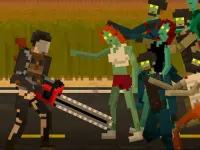
Nitrovenant 2 combines lane choices, pothole jumps, armored-car combat and bosses. The car fires automatically, so steering and timing remain important even when you are not choosing every shot. Across 120 stages in six settings, you are asked to deal with different demands while moving through zombie workers. A useful way to approach that mixture is to separate the question of where to drive from the question of which action to use. This guide develops that distinction with hypothetical practice situations rather than supplying a played walkthrough or a fixed solution to a stage.
On desktop, A/D or Left/Right changes lanes, Space or W jumps, holding R uses nitro, and holding J or the mouse button operates the machine gun. Arrow keys in the air perform tricks, while P or Esc pauses. Notice the difference between a directional input on the road and an input while airborne. Before a demanding section, identify which of those actions you intend to make. Pressing several actions together can make it harder to understand which choice helped and which produced an awkward result.
For a personal learning task, focus first on lane choice without trying to make every movement an attack decision. Watch the visible road and choose a destination lane for a reason. Then add jump decisions when a pothole or another relevant road situation appears. This is an order for learning the inputs, not a separate training mode. The car's automatic fire means you can pay attention to movement while learning how that fire behaves. The listed machine-gun control is an additional input; do not assume automatic fire and every weapon action are identical.
A lane change solves a positioning problem. Ask what is in the lane you want to enter and what you hope to accomplish there. In a hypothetical comparison, one lane offers a clearer visible path while another contains a pickup you would like to investigate. Reaching the pickup might be appealing, but the approach also matters. A change made without looking can exchange one immediate problem for another. Compare the visible destinations first, then choose whether a jump or nitro action has a useful role in that plan.
The same habit helps when several things compete for attention. A survivor, a power-up and a crowd can all suggest different priorities, but their presence does not establish that every route to them is equally suitable. Pick one immediate task and keep watching the road as you pursue it. You can describe the decision simply: “I am changing lanes to use the clearer route,” or “I am moving toward a visible opportunity.” A clear intention makes the result easier to assess than reacting to each object independently.
Potholes are one of the stated reasons to jump. Identify the road feature before pressing Space or W, and watch where the car is heading as it leaves the ground. Avoid assuming that a jump makes the car invulnerable or that every hazard can be solved by jumping. The useful practice question is whether the jump addressed the obstacle you actually saw. If the result was awkward, consider whether the initial lane choice, the timing or the destination needs more attention on a later attempt.
Ramps also support flips and barrel rolls. That gives airborne actions a different purpose from simply crossing a pothole. On desktop the arrow keys are listed for tricks while in the air. Keep the two tasks distinct when learning: first notice the takeoff and where you are heading, then consider the trick input available in that state. This guide does not prescribe an exact rotation, landing angle or score value. Observe the result rather than treating a general control description as a promise about precise physics.
Holding R is the listed desktop nitro input, and nitro lets the armored car plow through the crowd. Decide why you want to use it at the present moment instead of holding it merely because it is available. A hypothetical choice might involve a crowd ahead while a pothole also needs attention. Identify the movement problem as well as the attack opportunity. A nitro action is not evidence that a jump or lane decision can be ignored, and the instructions do not establish a period of invulnerability.
After using nitro, compare the visible result with your original intention. Did the car go through the crowd you were targeting? Did you remain aware of the road? This comparison turns a busy moment into a useful lesson about attention. It does not require assuming a recharge time, a resource cost or a guaranteed effect on a boss. Keep those details tied to what the current game shows. One well-understood nitro decision is more useful for learning than repeatedly using the input without tracking the outcome.
The armored car has a rooftop missile launcher and fires on its own. The controls also list holding J or the mouse button for the machine gun. Those facts support an important practical distinction: you can concentrate on steering while automatic fire operates, and you also have a listed manual weapon input to learn. Test that input with attention to the visible effect. Avoid inventing a reload key, ammunition rule or weapon-switch sequence from another driving shooter.
When a difficult road situation and a weapon decision coincide, choose which observation needs attention first. If you lose track of your lane every time you concentrate on firing, try a short attempt with movement as the main focus. Then add the manual action once the lane controls feel clearer. This is a self-chosen practice method rather than a claim that the game offers a separate shooting drill. The aim is to understand how your own input and the car's automatic behavior fit together.
Every stage ends with a giant boss with its own moves, and the game's description advises waiting until it gets dizzy before hitting back. That is a useful cue to look for, but it does not supply an exact attack sequence. Observe the current boss and compare its visible state with the opportunity you are considering. A tactic that happened to work against one boss should be reconsidered when the next boss behaves differently. Keep the decision tied to the encounter in front of you.
A personal practice question is whether you are reacting to a visible opening or simply repeating an input. If you have not identified the dizzy cue, concentrate on reading the encounter before building a longer sequence around it. This does not mean waiting motionless regardless of danger; lane choices and other necessary actions still matter. It means distinguishing “I see the opening I wanted” from “I hope the same action will work again.” No specific boss timing or guaranteed counterattack is needed for that distinction.
Power-ups and survivor rescues add reasons to look beyond the next crowd. Before changing direction toward an opportunity, examine the visible route to it. Consider what you will need to do afterward as well. In a hypothetical situation, a pickup could draw your attention away from a pothole farther along the route. The question is not whether pickups are worthwhile in general, but whether you understand the approach you are choosing now. No fixed reward or pickup location is assumed in that example.
Combos can unlock Fury mode, which adds another incentive to connect your actions. Still, a combo goal should sit alongside road awareness rather than replace it. Read the game's feedback to understand how the current sequence is developing. Do not assume a particular combo count, duration or Fury benefit that the description has not specified. If chasing a sequence repeatedly distracts you from movement, use the next attempt to reestablish the lane-and-jump routine before concentrating on the extra objective.
Weapon, armor and tire upgrades are part of the game, alongside twelve collectible cars, paint jobs and parts. Start an improvement decision by naming the problem you want to address. Are you trying to understand the weapon options, the car's equipment or the way the current setup feels? Read the available information before selecting an upgrade. The existence of several improvement categories does not establish a universal best purchase, an exact damage gain or a fixed cost.
Changing one choice at a time can make a comparison easier to follow. After reading the offered improvement, observe what changes during play rather than attributing every better result to it automatically. Your route choices and familiarity with a stage can also affect the attempt. Cars and cosmetic options are reasons to explore the available selection, but a different appearance does not by itself prove a specific performance advantage. Keep the distinction between what is displayed, what is stated and what you are still learning.
The six settings range from sunny fields and rainy forests to desert, a frozen pass, a dead city and the Inferno. Those names describe the journey without establishing special traction rules, weather penalties or a particular obstacle sequence. Read the road in each setting on its own terms. Daily challenges and missions give additional tasks, while Endless mode offers another way to play. Check the selected objective before using a stage-focused plan in a different mode.
For a manageable session, choose one habit: checking a destination lane, recognizing a jump decision or waiting for an observed boss opening. After the attempt, name one moment where that habit helped and one where your attention shifted elsewhere. On mobile, the documented gestures include left/right swipes for lane changes and an upward swipe to jump; inspect the current interface for the remaining actions. Play Nitrovenant 2 to try that focused approach, or browse the varied poki juegoo collection when you want another style of activity.


