
they are coming unblocked
Popular Games
Last Played
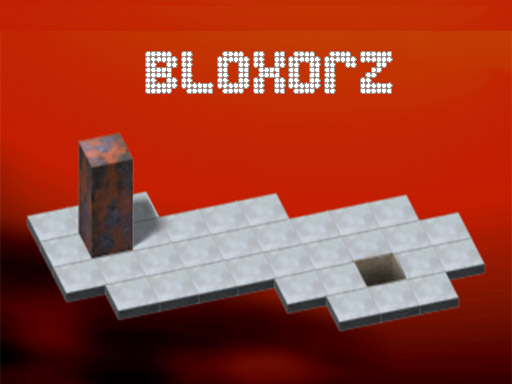
Bloxorz

Minecraft Battle Party

Death Copter
Crazy car parking stunts
Chess Move
Subway Surfers Las Vegas
Amgel Halloween Room Escape 25

Barbie Match Dress
Boat Girl Escape 2
Basketball Player Escape 2

New Car Park
Handsome Woman Escape
Minecraft Noob vs Zombies 3
Rescue The Rabbit 2
Jasmine Fun Skin Care

Jump straight in on Poki here: Play it on Poki.com.es. If you like thinking games in general, see what designers mean by a puzzle video game and how logic, pattern reading, and spatial awareness power the genre.
This classic doesn’t need loud effects or a 300-hour grind. It respects your brain. The core loop is clean. You move a 2×1 block across floating tiles, rotate it, split it, and finally drop it into a square goal. That’s it. But the moment-to-moment play isn’t simple at all. The magic is in how the board keeps teaching you one new twist at a time. The first few maps let you fail fast with zero penalty. You learn by doing. You notice edges. You start predicting how the block will tip when upright versus laid flat. That’s when the “I see it” hits.
What keeps it fresh is how every level feels authored. There are no filler corridors. The puzzle space is compact and legible, so you’re solving, not wandering. One minute you’re stepping gingerly across thin tiles that collapse if you stand tall, the next you’re juggling two halves of a split block to tag distant switches in the right order. It’s the kind of purity that rewards patience and punishes autopilot.
Think of each board like a small theater set. The props are switches, bridges, fragile tiles, and dead-end ledges that exist purely to bait greedy moves. Your job is to read how the block’s footprint will change after a tilt. A horizontal block moves like a short, stable car. A vertical block moves like a tall stool ready to topple. When you picture those shapes in your head before you press a key, mistakes drop off a cliff.
A good habit is to preview two plies ahead. If you stand the block upright on a tile that can’t support it, the level resets. So before you step onto a suspicious strip, ask if your next state will be tall or flat. On levels with multi-state switches, visualize which bridge segments will open and close after each press. Sketch that logic mentally, then execute.
You don’t need fancy inputs to master this. Arrow keys are enough. What matters is cadence. Tap-tap to sidestep when flat. Commit to deliberate two-step tilts when tall. If you’re on a narrow beam, slide sideways while flat, then rotate onto a safer platform. That micro-rhythm of “nudge, settle, tilt” keeps you from panic inputs that send you off the edge.
Camera discipline helps. If your setup lets you zoom or adjust view, keep the board framed so you can see the next two landings, not just the one under your feet. When in doubt, stop, breathe, and re-center your perspective. Rushing is how you feed the void.
Most levels revolve around a small set of rules:
Soft vs hard switches. Some toggle bridges permanently until hit again. Others are pressure plates that revert when you leave. Learn which is which before you commit your tall form on a one-way path.
Color coding. Bridge segments often signal where their control lives. If a bridge sits near a switch cluster, assume at least one is a decoy. Pressing in the wrong order can strand a half block.
Split mechanics. When the block breaks into two small squares, treat them like chess pieces with separate jobs. One scouts, one anchors. Rejoin them on a safe, wide tile.
A clean solve often involves “arming” a path, retreating to reset your stance, then taking the intended route with the board prepped. Trial and error is fine. Just don’t hammer keys. Study the wiring.
Speedrunners don’t brute force. They spot state cycles. If a switch sequence cycles the same three bridge states in order, they plan a path that reaches the goal during the right state, not after. You can steal that skill. Label transitions in your head: A, B, C. If the goal is only reachable on B, work backward to ensure your second-to-last move lands you there.
Also learn sacrifice moves. Sometimes you intentionally trigger a collapse to remove an illegal option from your future decision tree. Less choice can be more clarity. That’s strategy, not trolling yourself.
Your early hurdles are basic: don’t tip off edges, avoid standing tall on fragile tiles, align the final tilt with the goal. Midgame tests combo those ideas. The designers add puzzle knots where a single wrong switch order forces a reset, but the board is small enough that you never feel lost. Late game demands synthesis: split control, rejoin timing, and tight ledge work while bridges flick on and off.
If you feel stuck, step away for five minutes. Fresh eyes frequently see a route you missed. There’s no shame in using muscle memory to replay the first half of a level until it becomes a warmup. That frees headspace to study the final section where the real brain burn lives.
Plan two plies ahead.
Keep the block flat on fragile runs.
Use the tall stance to press floor buttons deliberately.
When split, designate roles: scout and anchor.
Rejoin on wide tiles, not on a bridge.
If a path seems impossible, you’re probably missing a pre-toggle.
Count bridge segments so you know which edge needs clearance.
Touch a new switch once, then pause to read the board.
Treat ledges as pivot pads for safe rotations.
On narrow hallways, shuffle flat, turn only at landings.
If you keep falling at the same spot, approach from a different state.
Press and release plates with the light half when split.
Use edge alignment to avoid over-tilting into space.
Think in rectangles, not squares. The 2×1 footprint matters.
Build muscle memory for common micro-routes.
Use resets as data. What killed you informs the real path.
Bridge puzzles reward parity thinking. Count moves to match the open state.
Don’t be afraid to backtrack two steps to fix a switch order.
If both halves are stranded, one of them should have stayed near a toggle.
Visualize the final tilt into the exit before you start the level.
Why does this format feel so tight compared to many browser puzzlers? Three reasons.
Rule clarity. There are very few verbs, but each interacts with simple, readable geometry. That keeps cognitive load focused on planning, not deciphering.
Puzzle density. Every tile tends to matter. Dead space is rare. You are almost always one or two good ideas away from a solve, which prevents fatigue.
Reset cost. Failure is instant and painless. That frictionless loop encourages experimentation and makes each “aha” feel earned rather than rolled by chance.
If you build Unity or WebGL puzzlers, study how these tiny boards outline intent with tile placement. Negative space can be a hint. Path width can telegraph the needed stance without text.
Performance wise, a grid with simple materials is friendly to older laptops and school machines. The control latency is tiny, and you never need high refresh rates to enjoy it. Big win for accessibility. If you’re switching from trackpad to a compact keyboard, give yourself a few puzzles to adjust your tap rhythm. The game reads quick, deliberate taps better than long presses on narrow ledges.
Players still talk about where this format came from and why it stuck. The broad strokes are consistent across communities: it began life in the late 2000s as a browser puzzle built around 33 tightly authored stages, widely circulated on hub sites, and associated with designer Damien Clarke and DX Interactive, with later remakes and ports keeping the idea alive for new players.
What does that history buy you today? A ruleset stress-tested over years. When you step into a contemporary port, it feels familiar in the best way. You don’t need a tutorial pop-up every ten seconds. The language of switches and bridges is almost universal now. That’s the stamp of a great logic toy.
Rather than a step-by-step for every map, here are reusable patterns you can apply anywhere:
Gate Priming. If a bridge needs to be open on move three, you should be leaving the switch on move one in a tall stance so your second move flattens you onto a safe tile that preserves the bridge state.
Half-Swap Rejoin. In split mode, park the anchor near the final bridge toggle, navigate the scout through a path that would be impossible when tall, then rejoin on a two-tile pad before doing the goal tilt.
Edge-Shimmy. When a ledge runs along the outside of a board, move flat along the ledge first, then pivot onto the interior, not the other way around. That avoids tall stumbles into the void.
Parity Lock. Count presses on a cycling switch. If odd presses open the bridge, ensure your path hits it an odd number of times before the endgame.
These patterns don’t solve levels for you. They compress your search space. Less guessing, more intention.
You will fail. A lot. That’s expected. If a sequence keeps burning you, insert a checkpoint ritual: once you reach a mid-board landmark, pause for five seconds, scan switches, and mentally rehearse the next three moves. The pause breaks tilt brain and gives your hands time to cool off. If you hit a true wall, stand up, grab water, come back. It’s wild how often the route pops into focus after a short reset.
Also, try a reverse rehearsal. Stare at the goal and imagine the final two tilts that drop you into it. Then work backward to where you are. This backward chaining is clutch on multi-bridge maps.
Students and office warriors: fast sessions, instant resets, clean logic.
Puzzle purists: compact boards, no menu bloat, zero busywork.
Speedrun dabblers: learnable cycles, skill expression without grind.
Developers: a living case study in elegant constraint.
If you just want background noise and mindless clicks, this isn’t it. If you want that “ohhh” glide when a tricky board finally clicks, you’ll vibe with it.
If you struggle with small keyboards, remap arrows to ESDF or IJKL if your version allows it. For visual clarity, keep screen brightness steady and avoid harsh glare. If you’re coaching a younger player, narrate stance changes out loud: “flat on the plate,” “tall for the toggle,” “split for the scout.” Verbalizing states helps cement mental models.
Simple tiles aren’t a budget choice. They’re a design win. High-contrast geometry makes affordances obvious, so your brain spends cycles on logic instead of texture soup. Sound, when present, is usually minimalist soft clicks and toggles that confirm inputs without getting in the way. None of it tries to steal the show. It all serves readability.
What is bloxorz and how long does it take to finish?
It is a level based spatial logic puzzler built around tilting a 2×1 block across floating platforms into a square exit. A first clear can take a handful of hours depending on your patience, with replays much faster once you internalize switch cycles.
Is it kid friendly?
Yes. There’s no violence, no timers forcing panic, and failure simply resets the board. It’s great for teaching planning and cause-and-effect.
Do I need twitch reflexes?
No. Precision matters, but this is about deliberate inputs. The only time speed becomes a factor is if you try to optimize routes for fun.
Any hardware tips for school laptops or older PCs?
Close extra tabs, set browser zoom so the whole board is visible, and keep keyboard input repeat at default. That’s more than enough.
How do I improve without guides?
Practice backward chaining. Visualize the final tilt into the goal, then step back move by move until you find a reachable state. This trims a massive amount of trial and error.
I keep failing near the end. What gives?
Late mistakes usually come from forgetting your stance. If you are about to step onto a fragile tile, make sure you’ll be flat after the move. Rehearse that transition before you go.
Are there modern versions or spiritual cousins worth checking out?
Yes. The format has seen remakes and ports over time, and the broader puzzle scene keeps iterating on clean, readable logic challenges. If you enjoy pure problem solving with small boards and big ideas, you’ll find plenty to love.


